
GoShip
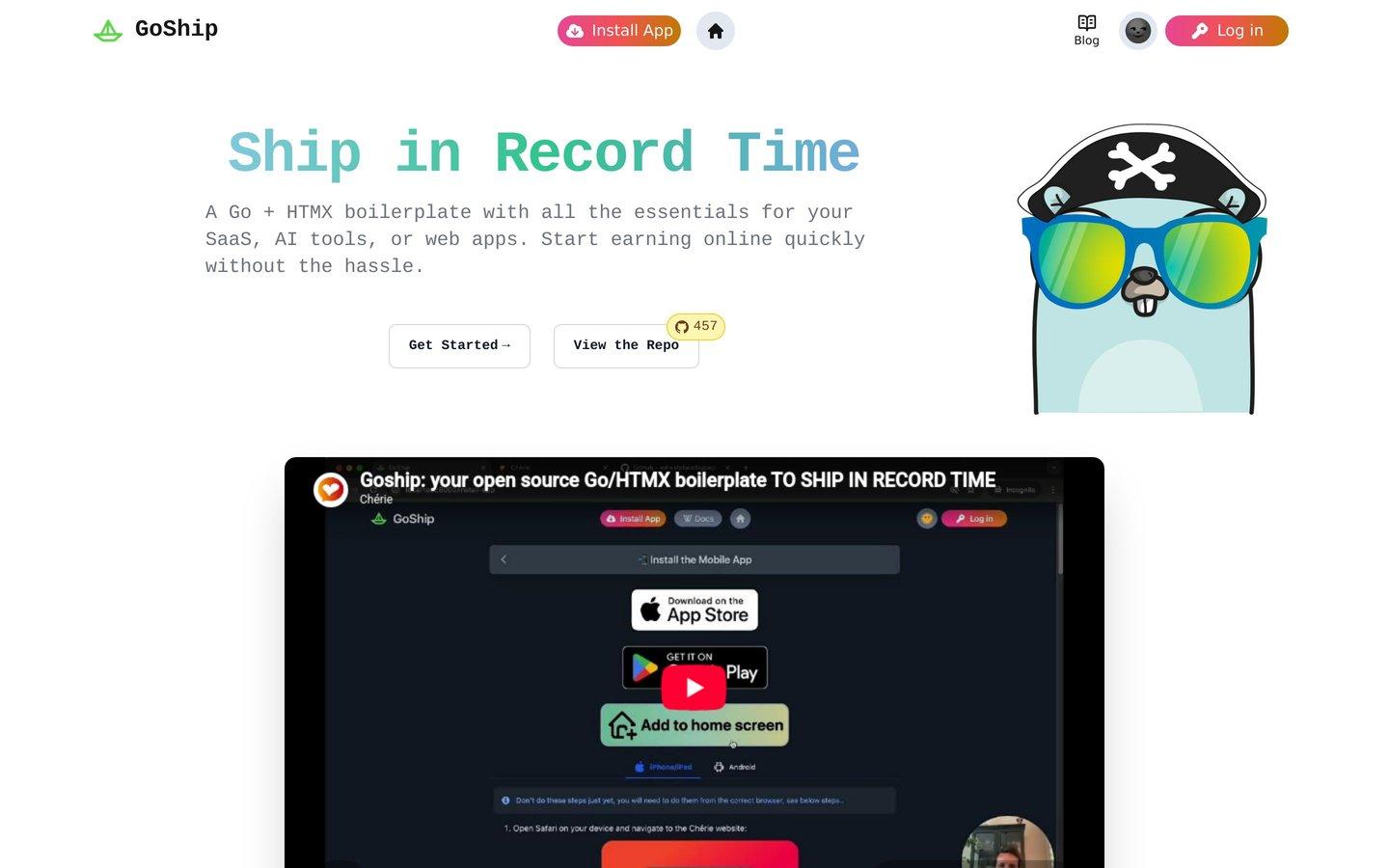
Open-source Go + HTMX SaaS boilerplate with Stripe, notifications and PWA support

- Best for
- Go developers who want a batteries-included, HTMX-driven SaaS boilerplate with billing, notifications and PWA support, avoiding a JS frontend framework entirely.
- Skip if
- You want a React/Vue-driven frontend or a more mature/widely-adopted Go starter with polished documentation - GoShip's docs are still a work in progress.
GoShip is a free, MIT-licensed Go boilerplate (forked from Pagoda) that pairs HTMX and Templ for server-rendered interactivity with Ent ORM, Postgres (with pgvector), and Stripe billing. It ships email/password auth, real-time and scheduled notifications with push support across PWA/iOS/Android, SMTP/Resend email templates, S3 file uploads, background task processing, and both Go unit tests and Playwright E2E tests, with Kamal-based deployment.
Pros
- Genuinely comprehensive for a Go project - auth, Stripe billing, notifications, background jobs, file uploads and PWA support all included
- Built and battle-tested in a real production app (Chérie), not just a demo
- Includes pgvector support, making it AI/ML-ready out of the box
Cons
- Documentation is explicitly still a work in progress per the maintainer
- HTMX + Templ is a less mainstream pattern than React/Next.js, narrowing the pool of developers familiar with it
- Smaller community (457 stars) than flagship SaaS boilerplates in other ecosystems
Features
Auth and access
- Auth included
Payments and billing
- Payments included
- Subscriptions
AI capability
- RAG / vector search
What's in the box
- Email templates
- In-app notifications
- File uploads
Data and infra
- Background jobs
- Cron scheduling
- Realtime subscriptions
Quality and DX
- E2E tests
- Unit tests
Licensing and commercial
- Open source
- Free tier
- MIT licensed
Alternatives
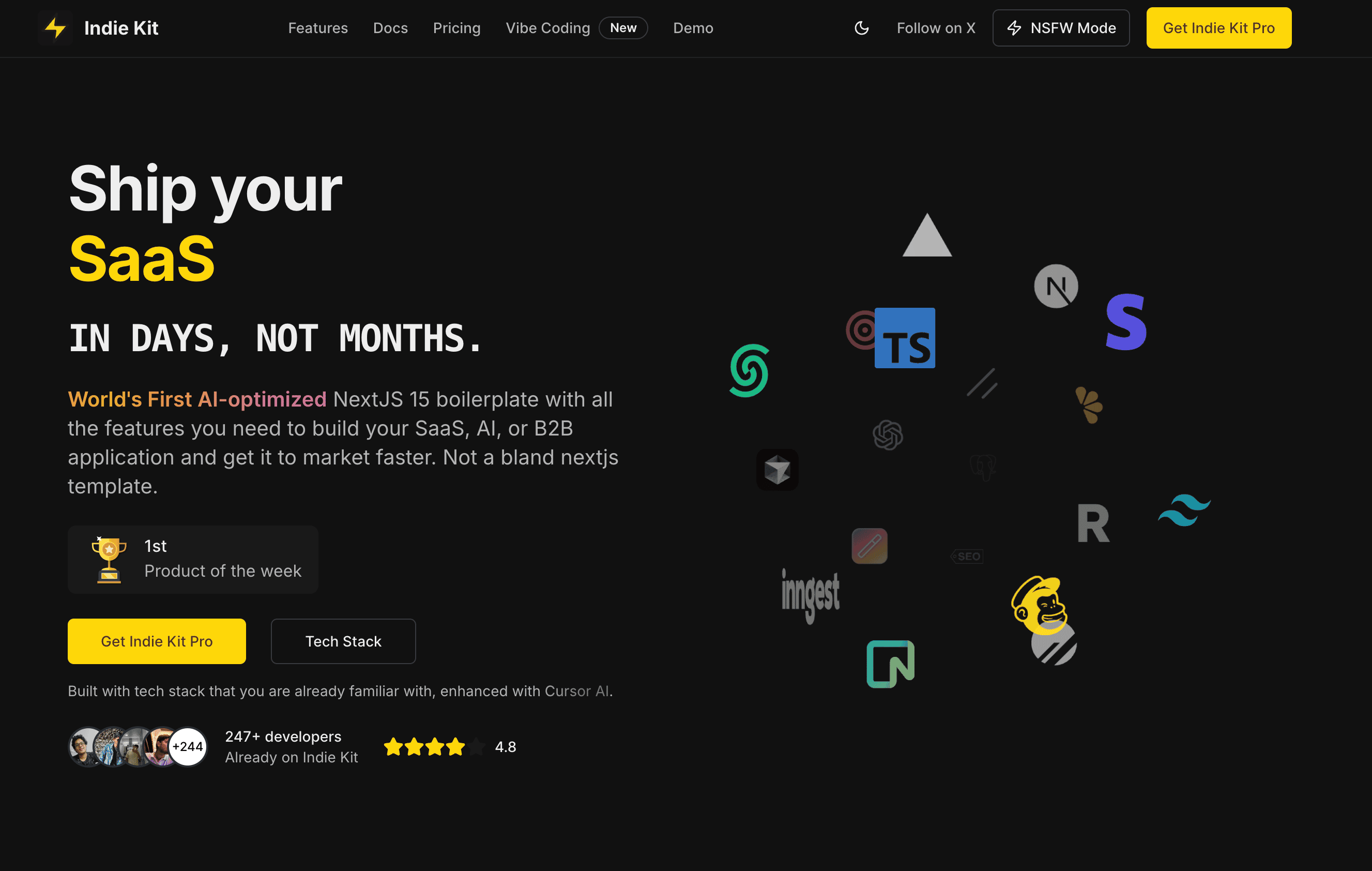

IndieKit
Next.js 16 SaaS starter with a free MIT tier and closed-source paid Pro
from $79
Carrot Seed
Multi-platform starter for web, mobile, and desktop apps
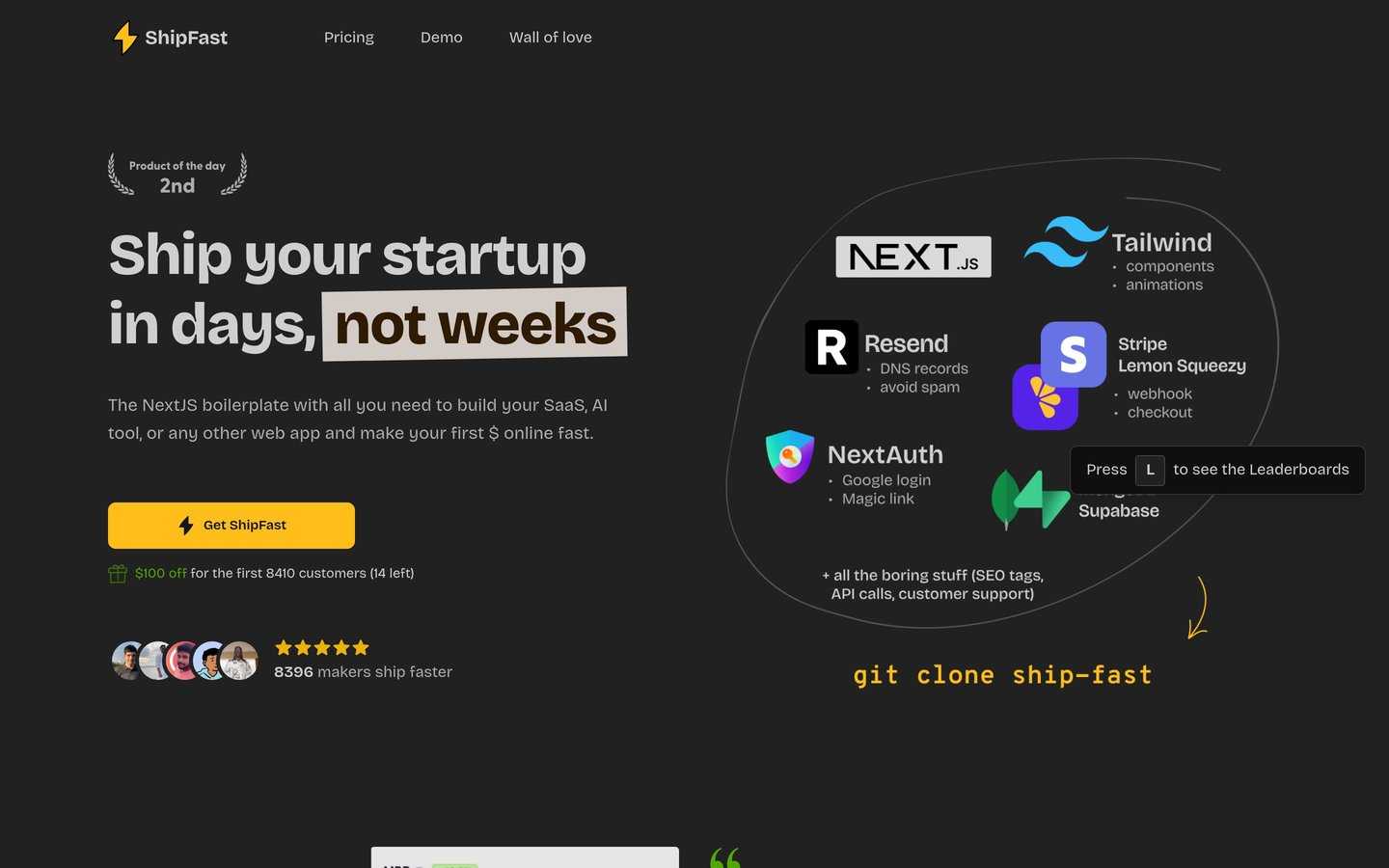

ShipFast
Closed-source Next.js SaaS kit from indie hacker Marc Lou